And how this impacts later search results and AdWords performance of these websites? Today’s Google Doodle is a nice animated graphic of Tomato throwing festival in Buñol – nice work. Opposite to San Fermin, I love this festival.  I was surprised when I clicked through, and I noticed SERP is for the keyword “La Tomatina” and on the top of the results I can see an organic listing – a microsite made for SEO purposes!
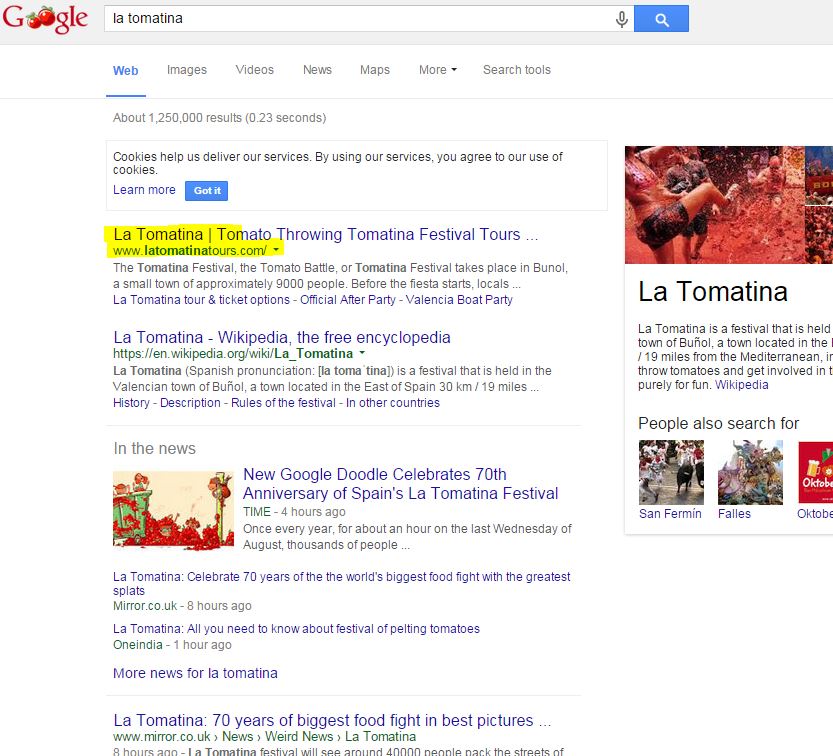 I know this market quite well, and I used to compete with PPTravel, The company behind this particular microsite (That’s my connection with this SERP for you). Guys from PPT are seasonal spenders (PPC, Contextual, etc.) and heavy SEO focused lot. Ages ago they created a lot of landing pages and microsites to deals with all the events they have in their annually repeating portfolio (very simple and sensible solution in my opinion). For all of you interested my former client is no longer in the top section of the search results for this term after they changed their approach to the online marketing and priorities.
Coming back to the point I know how hard is to fight for the top spots in this area and I know what money are generated for the next year bookings from all of these people who missed on the event this year. I wonder how such exposure will work for PPT in the long term (try to imagine re-marketing audience alone). Their “Made for SEO” microsite that is created to increase PPT’s main website search footprint.
It was earlier this year I came across a Google’s Search Quality team post about Doorway Pages (Sites) post. Pretty much this website from PPT does not represent unique content and you are diverted to the main website with this same content to close the deal and book tours or read again this same text 😉 – so…
After viewing “La Tomatina” SERP to which Google Doodle sends today millions of users I wonder:
1) When your “Made for SEO” microsite is legitimised? The moment it has over 5K likes on Facebook? The moment Google Doodle leads you to this page?
2) Should Google team send traffic from Doodle to such a business critical search results or should links from Doodle be limited to some non business critical (unless charity) to assure things like today’s “accidental” exposure do not happen? How about sending people to publishing based SERP “70th Anniversary of La Tomatina” instead of “La Tomatina”?
I don’t know, but this would be my choice of link for Google to consider for their La Tomatina Doodle
Please note I strongly believe product pages, microsites that allow us to pitch different elements to different audiences are a great way to segment our online marketing efforts. Whatever is the “dream” search output Google expects the duplication of content is unavoidable but what I am asking here is related to power of links like Google Doodle. With high profile links and traffic – is Google in right to promote SERPs that are questionable?